Durability of FLN Interventions at Scale
As part of a project supported by the What Works Hub for Global Education (WWHGE) at the University of Oxford, ASER Centre developed two tools to understand how foundational learning policy translates into classroom practice in India.
The Teacher Mindset Survey was designed to capture how the perceptions of staff priorities, beliefs and community context among teachers shape their teaching practices, particularly for students who are falling behind. Persistent gaps in foundational learning, documented since 2005 through successive rounds of ASER, point to the need for significant shifts in how teachers identify and support struggling students. The survey aimed to understand these issues from the teachers by delving into how teachers identify students who need support, what they believe contributes to learning gaps, how they respond to such gaps and what support is available to them. The survey was administered in 170 schools across Barabanki and Rampur districts of Uttar Pradesh.
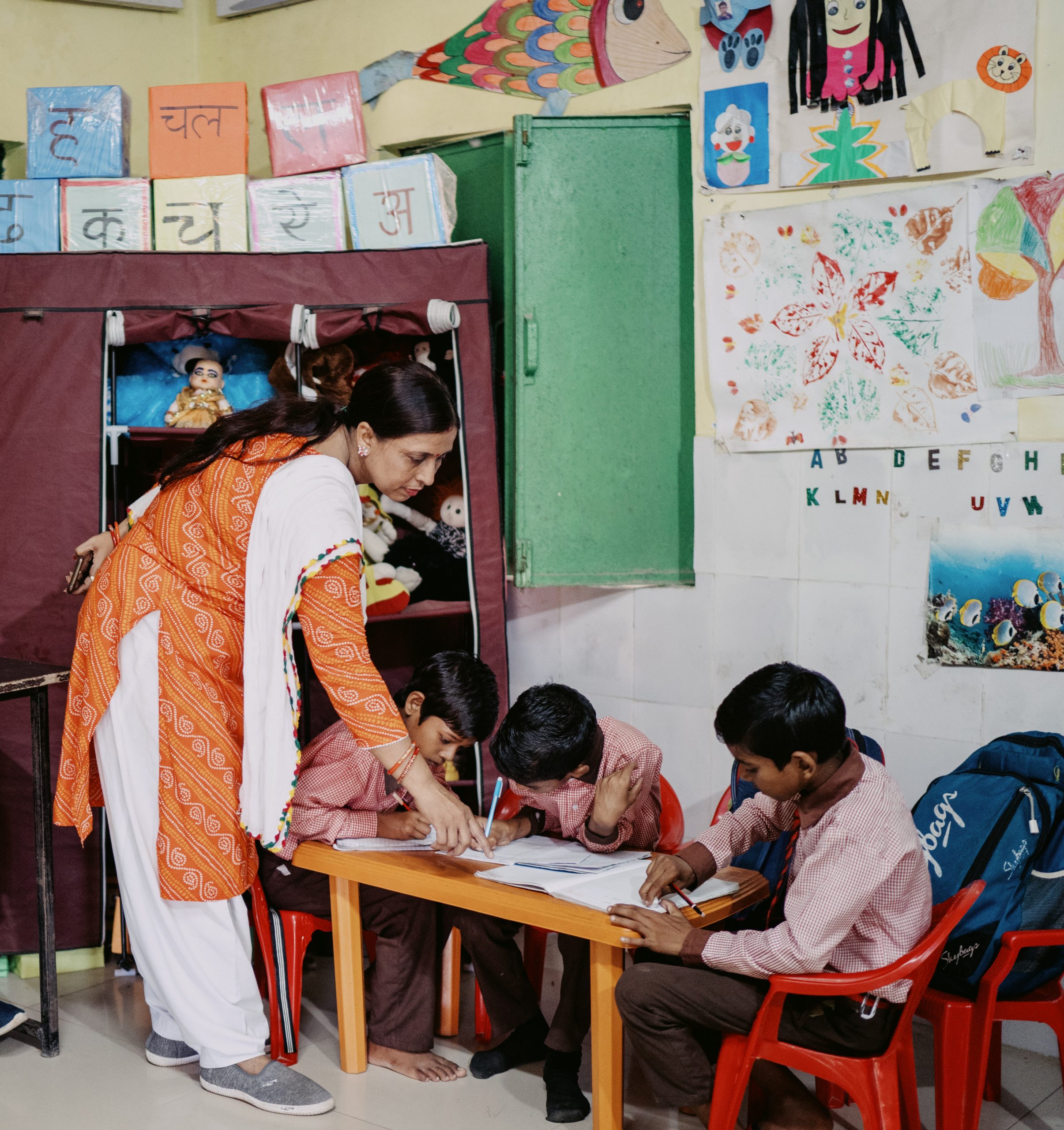
The Classroom Observation Tool was developed to document classroom processes in a standardised and scalable way. Unlike most existing tools, which are designed for high-resource contexts and rely on nuanced evaluative judgements, this tool adopts a low-inference approach, recording the presence or absence of specific, observable behaviours and materials. It focuses on the availability of teaching-learning infrastructure recommended under NEP 2020 and the NIPUN Bharat Mission and examines whether classroom interactions align with these policy priorities. Data was collected across 171 schools in Uttar Pradesh in the first phase, and subsequently in 215 schools across 16 states.
Location: Uttar Pradesh (Phase 1); 16 states (Phase 2)
Partners: What Works Hub for Global Education (WWHGE), University of Oxford